

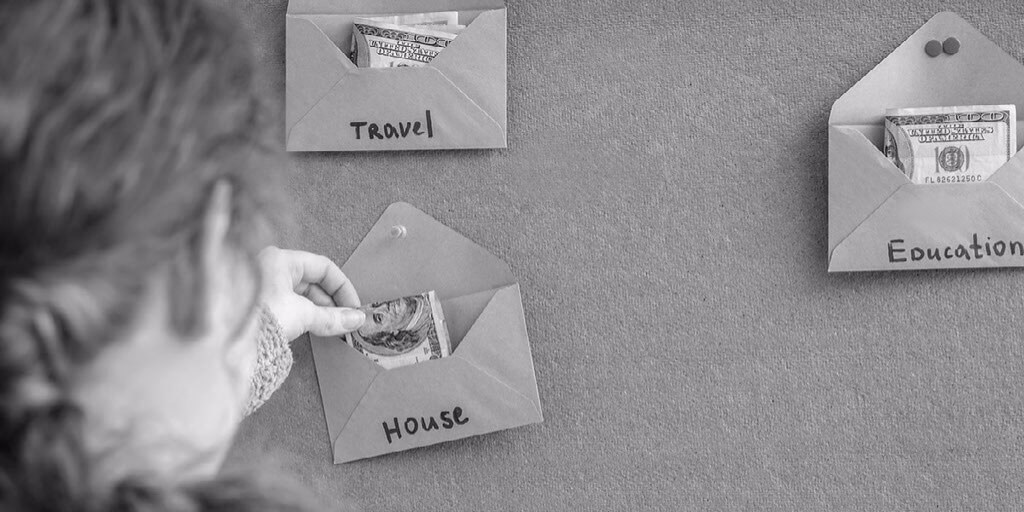
Saving money can be challenging, especially when living paycheck to paycheck. But there's a simple way to save more and make the most of your hard-earned cash: the envelope challenge. By following this system, you can set aside money for specific expenses, build up your savings account, and put yourself on track toward greater financial freedom. Let's take a closer look at how it works.
The envelope challenge is based on a budgeting system that dates back to the Great Depression Era. People would use paper envelopes labeled with different expenses (like rent, food, etc.) and store cash in them until they ran out. With each paycheck, they'd divide their money between these envelopes to keep better track of their spending and easily identify where their money was going each month.
Today's envelope challenge looks quite different but follows the same principles as its predecessor. Using physical envelopes or binder pages with pockets, most people use separate slots for each spending category. This makes tracking how much you have left in each "envelope" easier since you don't need to withdraw the cash and count it out every time you spend something.
1) Set a Savings Goal
Before you start your envelope challenge, it's important to set a goal for how much money you want to save each month. This will help keep you motivated and on track with your savings plan. You could save for a vacation, a house payment, or an emergency fund. No matter what your goal is, make sure you're realistic and stick to it.
You could stockpile cash for Christmas next year, a wedding, or any other big event or purchase you're planning. Using this system could also save towards multiple goals by using categories.
2) Identify Your Spending Categories
Once you have a savings goal, it's time to break down your budget into spending categories. Think about the expenses you have each month and decide how much money you want to allocate to each one. Examples could include vacation, Christmas, and credit card debt.
Alternatively, you could set one goal for your envelope challenge and put a number on each envelope. So, if your goal is to save $1,000 in one year, you could use various envelopes with numbers totaling $1000 that you fill each week. To save $1000 in one year, you would need to save a little over $19 a week.
3) Set Realistic Timeframes
When setting up your saving envelope challenge, make sure that any timeframes associated with it are realistic with respect to when you plan on reaching your goal. You don't want the pressure of unrealistic deadlines because this can cause more stress than help when trying to reach a financial goal.
If you get paid every two weeks, you'll want to stuff your envelopes with cash every two weeks. If your goal is to save $1000, you'd need to stuff around $38.50 into each envelope every two weeks.
4) Work with your Budget
When setting up a cash envelope system, it's also important to remember that you should only be putting aside what you can realistically afford. Don't try and cut corners elsewhere to funnel more money into your savings envelopes; if anything, this will only lead to frustration later on down the line.
Ask yourself how much of your income is disposable, then decide how much of that income should go towards saving each month.
A good rule of thumb is to put at least 10-15% of your income towards savings. If you are self-employed, you should try to save 10% of your earnings after taxes.
5) Build your System
You can purchase a savings envelope challenge system on websites like Amazon or Etsy or create one yourself. Whichever route you choose, make sure that your envelopes are labeled accurately and easy to identify.
You may also want to write down the amounts that should be stored in each envelope or use a visual reminder like color-coding them to help track how much is left in each.
You could use a box, a binder, or a file folder to store your envelopes. This will make it easy for you to access your money when needed and stay organized.
Finally, there's no one-size-fits-all solution to the envelope challenge. Everyone's financial situation is unique, so make sure that whatever system you choose works best for your own personal needs. As long as you stick to your plan, you should be able to reach your savings goals right on time. Interested in learning additional savings tips and techniques? Sign up for our 31-Day Savings Challenge!